• Home
  • About
  • Contact
  • FAQ
  • BOOK NOW
  • Shop 4 Charity
  • Blogs
  • Freebies
HOUSE OF PHYSIOTHERAPY
  • Home
  • About
  • Contact
  • FAQ
  • BOOK NOW
  • Shop 4 Charity
  • Blogs
  • Freebies

blogs

Knee Pain When Running: Why It Happens and How to Fix It Properly

21/1/2026

0 Comments

 
Picture
If you’re a runner and feel pain around or behind your kneecap - especially during or after runs, stairs, squats, or downhill walking, you may have what’s commonly known as runner’s knee.
Clinically, this is called patellofemoral pain syndrome (PFPS). It’s one of the most common running-related injuries and affects runners of all levels - from beginners to seasoned marathoners.
The good news?
Runner’s knee is very treatable, and in most cases, you don’t need to stop running long-term - you just need the right strategy!

What is Runner’s Knee (Patellofemoral Pain)?

Runner’s knee refers to pain originating from the patellofemoral joint, the joint under where the kneecap (patella) sits.
Importantly, runner’s knee:
  • is not usually caused by structural damage to the knee
  • doesn’t mean your knee is “worn out”
  • often develops gradually rather than from one single injury
Research shows patellofemoral pain is best understood as a load management and movement control issue. 
Picture
Common Symptoms of Runner’s Knee
​
Runner’s knee pain is typically:
  • Felt around or behind the kneecap
  • Worse during or after running
  • Triggered by stairs, hills, squatting, lunging, or sitting for long periods with the knee bent
  • Can feel achy, sharp, or tight
  • Some runners describe it as a “pressure” or “burning” sensation rather than sharp injury pain.

Why Does Runner’s Knee Happen?

Runner’s knee rarely has one single cause. Instead, it usually develops when the knee is exposed to more load than it can tolerate, often combined with poor control through the hip, knee, or ankle.

Common contributing factors include:
  • Sudden changes in training
    Increasing distance, speed, hills, or intensity too quickly
  • Poor load tolerance
    The knee simply isn’t strong enough yet for the demands placed on it
  • Quadricep and gluteal weakness
    Reduced strength and control upon landing can increase stress at the kneecap
  • Poor running mechanics
    Excessive knee collapse (valgus), over-striding, or inefficient cadence
  • Reduced ankle or foot control
    This can change how force travels up the leg, poor footwear choices 
  • Inadequate recovery
    Not enough rest between sessions or poor sleep and stress management
Why Rest Alone Doesn’t Fix Runner’s Knee
​
A common mistake runners make is stopping all running until pain disappears, then attempting to return to training exactly the same way.
This often leads to:
  • temporary relief
  • loss of strength and fitness
  • loss of running tolerance 
  • repeated flare-ups once running resumes
Current evidence strongly supports active rehabilitation rather than prolonged rest.

​How Physiotherapy Helps Runner’s Knee 

At House of Physiotherapy in Petersham, runner’s knee rehab isn’t about generic exercises or advice like "just don't run anymore”.
​
Your assessment focuses on:
  • how your hips, knees, ankles, and feet work together
  • your running load and training structure
  • strength, control, and timing combined
  • identifying why the knee is being overloaded

Treatment typically includes:
  • targeted strength training (especially hips, quads, calves depending what you need)
  • control and stability work including single leg exercises and landing dynamics 
  • gradual, structured return-to-run planning
  • gait and technique guidance when needed
  • education so you understand what your knee needs
​
The goal isn’t just pain relief - it’s resilient knees that tolerate running long-term.
Should You Keep Running With Runner’s Knee?
In many cases, yes - with modifications.
Pain-guided running, adjusted volume, and smarter loading are often part of recovery alongside strength training/rehab. Complete rest is rarely necessary unless pain is severe or worsening and in that case it may need a short period of de-loading first.

We can help you:
  • reduce aggravating factors
  • relieve symptoms 
  • maintain fitness 
  • restructure your running program
  • rebuild tolerance safely
  • avoid the stop-start injury cycle
  • avoid it happening again in the future 
When to Seek Help
​
You should book an assessment if:
  • knee pain lasts longer than 1–2 weeks
  • pain keeps returning every time you run or is worsening 
  • stairs, walking or daily activities are painful
  • you’re unsure how to modify training or progress safely and you're feeling stuck
Early intervention leads to faster recovery and fewer flare-ups.
Picture
House of Physiotherapy offers:
  • 1:1 tailored sessions
  • evidence-based rehab
  • runner-specific strength and load planning
  • running programs and structured plans
  • clear explanations 
👉 Book your assessment today and get back to running with confidence.
Book here
0 Comments

Understanding Low Back Pain: Why It Happens & How to Finally Fix It

30/10/2025

0 Comments

 
​If you’ve had low back pain, maybe a nagging ache after sitting too long, stiffness when you bend, or sharp twinges when you lift, you’re definitely not alone. In fact, the WHO reports that in 2020 around 619 million people globally were living with low back pain. World Health Organization+1 

But here’s the good news: most low back pain is treatable and manageable, often with a combination of movement, education, and the right support. Not just resting or scans.
Picture
​Low back pain can include pain that is new and sudden, recurring, or long-standing (chronic). In around 90% of cases, no specific structural disease or serious pathology is identified (this is called non-specific low back pain).
​
That means: feeling pain does not automatically mean you have something catastrophic going on.

Why Does Low Back Pain Happen?

There’s no single reason for low back pain, especially when it’s non-specific. Some key contributing factors include:
  • The spine and lower back are load-bearing, moving and supporting your body in many ways, such as bending, lifting, twisting. Overuse, or simply movements the body isn’t used to, can trigger pain.
  • Muscle and joint fatigue, stiffness, or imbalance. When muscles supporting your lower back, hips and core don’t coordinate well, some structures pick up extra load.
  • Prolonged sitting, tightness, weakness and lack of stability, can all contribute.
  • Psychosocial factors matter: stress, mood, previous pain experience and fear of movement all interact. According to pain science, low back pain is biological and psychological/social.
  • Importantly: Many changes you might see on a scan (e.g., disc bulges, degeneration) are common in people without back pain, so imaging may not pinpoint the cause.


So the role of physiotherapy is to help identify the movement, load and lifestyle factors that are driving the pain and help you build control, stability and confidence in your body again.

​Simple Evidence-Backed Tips for Low Back Pain Relief
Picture
Here are some practical strategies that can help with managing your low back pain:
​
  • Stay as active as possible. Avoid prolonged rest. In fact, long bed rest or staying still correlates with slower recovery and cause things to tighten up further.

  • Start gentle movement. Walking, gentle stretching, swimming. Movement helps regain mobility, flexibility and strength and it can help calm down the pain response!

  • Break up sitting/standing. If you work at a desk, aim to stand or move every 30–40 minutes.

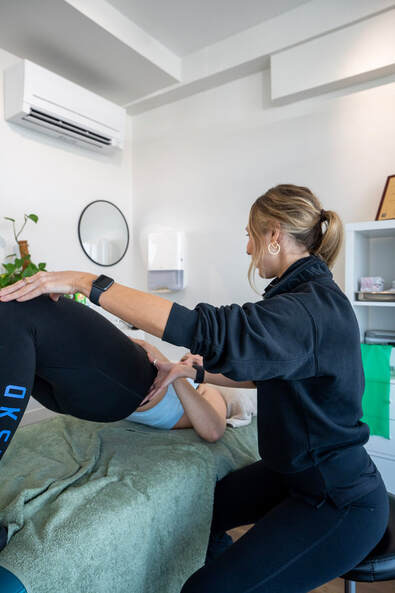
  • Strengthen the right muscles. Focus on your glutes, hips, core, and other supporting muscles, strengthening these muscles surrounding can help prevent low back pain from returning. If this is too hard at the moment or you're not feeling confident - see your physiotherapist first!
 ​
Look after your lifestyle. Sleep, stress, diet and smoking, these all matter when managing back pain. The broader picture counts.

Use heat therapy. Heat can relax muscles, especially if they are in spasm/tight. It can help relieve symptoms when they're acute. 

​When Should You Get Help?

If your pain is sharp, dull, tingling, numb or just isn’t improving, is recurring again and again, is stopping you from sitting, bending, moving, running or sleeping, that’s your cue to book in with a physiotherapist.

Now, sometimes back pain needs urgent medical intervention, if you experience any of these symptoms, seek help immediately:
  • Loss of bladder/bowel control
  • Numbness, pins and needles or severe weakness around the groin or running down both legs at the same time
  • Unexplained weight loss or fever
  • Pain after major trauma
  • Night sweats, nausea
These signs could indicate something more serious (although they’re rare)!

How We Can Help You

At House of Physiotherapy, a session includes:
  • A thorough assessment of how your spine, hips, knees, core, glutes are working together
  • Identify any muscle/ movement imbalances or loading issues
  • Tailor a plan that fits you (your work, your activities, your lifestyle)
  • Support you with exercises, manual therapy, education (so you understand your pain and what is causing it)
  • Help you gradually return to your full life, work, running goals, workouts, daily activities -and prevent recurrence
Picture

​Why Choose Us for Low Back Pain Treatment in Petersham

If you’re searching for low back pain treatment in the inner west, here’s how House of Physiotherapy stands out:
  • You’ll get one-on-one sessions with a physiotherapist. No behind curtain treatments or shared sessions. 
  • We focus on movement, control and education so you understand what’s happening in your body.
  • We tailor everything to your lifestyle, whether you’re training for a half-marathon, running around after kids, or managing desk work and errands.
  • Our goal isn’t just pain relief today, we aim to help you move confidently, stay active, and prevent future flare-ups.
  • We incorporate evidence-based approaches only

​
👉 Ready to book your initial assessment? Visit the booking link below or call us today on 0434 612 348. Let’s get your lower back moving again and feeling strong.
I want to feel strong again!

​Low back pain is common. It’s not a sign that you’re broken, and in the vast majority of cases, you’re not dealing with a serious pathology. The key? Stay active, understand what your body is doing, and get the right support targeted at your situation.
​
With the right plan, you can recover, return to your movement goals (running, juggling kids, training, everyday life) and stop living with the fear of “it coming back again”.
0 Comments

    Author
    - Jasmine Watson

    Hi, I'm Jasmine. I studied a Bachelor or Health Science in Sport and Exercise Science and a Doctor of Physiotherapy. I work with busy, active adults who are stuck in the loop of flare-ups and frustration. I give them clarity, a simple plan that works with their lifestyle, and the confidence to trust their body again, so they feel at home in it. 

Site powered by Weebly. Managed by CheaperDomains.com.au
  • Home
  • About
  • Contact
  • FAQ
  • BOOK NOW
  • Shop 4 Charity
  • Blogs
  • Freebies